
Las Vegas is celebrated worldwide for spectacle—dazzling lights, iconic casinos, and a promise of escape. Yet beneath this carefully curated image exists a lesser-known and deeply human story. Hidden below the Strip is an extensive network of flood-control tunnels, stretching for hundreds of miles, that has become an improvised refuge for people living on the margins of one of America’s most prosperous cities. These underground spaces are not symbols of mystery or myth, but of resilience, vulnerability, and survival. The individuals who live there navigate extreme heat, seasonal floods, and profound social isolation, often invisible to the millions of visitors above them. Their lives challenge our assumptions about urban success, housing insecurity, and who gets left behind in rapidly growing cities.
This story looks beyond headlines and stereotypes to examine how these tunnel communities came to exist, what daily life below ground truly entails, and why their presence raises urgent questions about inequality, public policy, and compassion in modern urban centers. By understanding what lies beneath Las Vegas’ neon glow, we gain a clearer view of the complex realities shaping cities around the world—and the people who endure within them.
Unveiling the Vegas Underworld: The Extensive Tunnel Networks
When people think of Las Vegas, they picture the dazzling lights of the Strip, luxury hotels, and endless entertainment. As one resident put it,
The city dazzles with luxury hotels, casinos, and endless entertainment, but many don't know what exists just below this desert paradise.
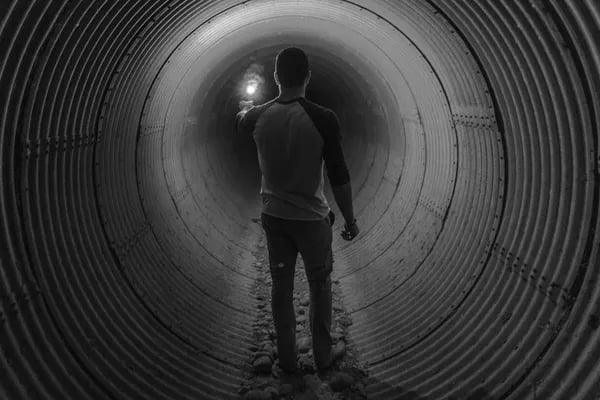
Yet, beneath the neon glow, there is a hidden world that few visitors ever see: the Las Vegas tunnels. This vast underground network stretches for approximately 200 miles beneath the city, forming a secret labyrinth that supports a community of people living out of sight.
Origins: Storm Drains and Flood Control
The Las Vegas tunnels were not built for people. Their original purpose was to serve as storm drains and flood control systems. The ground in Las Vegas is extremely hard and dry, which means rainwater cannot soak in as it would in other places. When storms hit—sometimes even from distant mountains—water rushes into the city and needs somewhere to go. To prevent dangerous flooding on the streets and around the famous casinos, engineers created this extensive network of tunnels to divert water safely under the city.
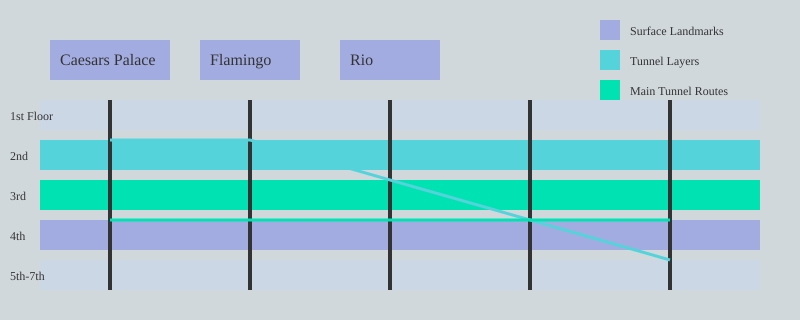
Depth and Complexity: Seven Floors Underground
What surprised me most when I first learned about the Vegas Strip underground was just how deep these tunnels go. Some sections are as many as seven floors beneath the surface. The tunnels twist and turn, connecting in complex ways that resemble neighborhoods. Residents have even given different sections their own names, much like the communities above ground. It’s easy to get lost without a guide or a flashlight, and the endless darkness can change the way people think and behave.
Hidden Beneath Iconic Landmarks
Many visitors have no idea that while they’re enjoying the glitz of Caesars Palace, the Flamingo, or the Rio, they are actually standing above a network of tunnels. These storm drains run directly under some of the most iconic sites in Las Vegas. The entrances to the tunnels are often blocked by heavy metal bars, both to keep out unauthorized visitors and to prevent trash from entering during floods. This security is necessary, but it also means that those living inside are cut off from the outside world in many ways.
Flood Risks: Danger from Above and Afar
One of the greatest dangers for those living in the Las Vegas tunnels is the risk of flash floods. Because the city’s ground is so hard, rainwater from storms—even those miles away in the mountains—can rush into the tunnels with little warning. Residents have described how water can surge through the tunnels in just minutes, turning a hidden home into a deadly trap. Some have lost friends to these sudden floods, and everyone who lives underground is aware of the risk.
Life Underground: A Hidden Community
Despite the dangers, an estimated 1,500 people call the tunnel network home. Many have no IDs and stay underground to avoid law enforcement. Some were even born in this dark world and have never seen daylight. The tunnels have their own rules and routines, and people have adapted to life without sunlight. The police radios and cell phones often do not work underground, making it a world apart from the city above.
Life in the Shadows: The Tunnel Dwellers’ Hidden World
Just beneath the bright lights and constant noise of Las Vegas, a hidden world exists. Around 1,500 people, often called the “mole people,” live in the city’s underground tunnel communities. These tunnel dwellers have created a life in the shadows, far from the casinos and tourists above. Many have no formal identification and avoid law enforcement, making them almost invisible to the world on the surface.
Underground Neighborhoods and Social Structure
The tunnel system is vast, stretching for miles beneath the city. Over time, residents have given different sections their own names, much like neighborhoods in any city. These underground communities develop their own social structures. Some areas are known for being safer, while others are marked by tension, bullying, or even violence. As one long-term resident shared,
"I've been in these tunnels for six years and there has been times where we've had good people here and it was a sense of community."
Despite the harsh environment, a sense of belonging and cooperation can form. People look out for each other, share what little they have, and sometimes work together to survive. But the threat of crime and violence is never far away. Some tunnels are controlled by “top dog” residents who enforce their own rules, and stories of attacks or theft are common.
Survival Without Basic Amenities
Life underground means living without basic comforts. There is no fresh water, no electricity, and very few resources. The ground in Las Vegas is so hard that rainwater cannot soak in, so the tunnels were built to channel water away from the streets. But during storms, water can rush in with little warning, turning the tunnels into death traps. Many residents have lost friends to sudden floods, and the danger is always present—even on sunny days, a storm miles away can send water barreling through the tunnels.
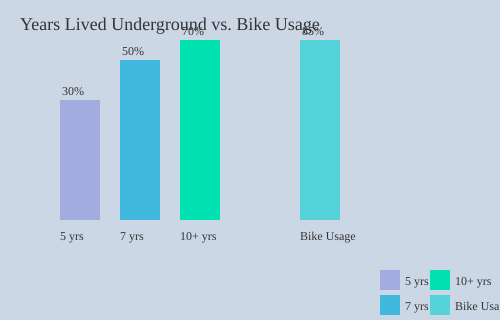
Resources are scarce. Some people use water from the city’s drainage system to wash themselves, despite the risk. The smell in certain tunnels is overwhelming, and trash piles up quickly. Makeshift homes are built from whatever can be found—old furniture, tarps, and shopping carts. Many tunnel dwellers have lived like this for five, even ten years or more.
Bicycles: The Lifeline of the Tunnel Communities
Getting around in the tunnels is a challenge. The network is so large and winding that walking can take hours. For this reason, bicycles are the primary mode of transportation. As one resident put it,
"Walking inside the tunnels takes a lot of time, so bikes are like cars out here."
Bikes are so valuable that some residents repair and sell them to others. Without a bike, moving between different tunnel neighborhoods or venturing out for supplies is almost impossible. For many, a bicycle is the key to survival in this underground world.
Drug Use and Emergency Response
Drug use is a reality in the tunnels, and overdoses are common. Narcan nasal spray is a lifeline for many. Residents keep it on hand and know how to use it to save someone who is overdosing. The spray can revive a person, but there is only a 30-minute window to call for an ambulance. In a place where help is far away and trust in authorities is low, this small tool can mean the difference between life and death.
Danger and Isolation
Life underground is dangerous in many ways. Besides the threat of floods and violence, getting lost is a real risk. The tunnels are a labyrinth, with some parts narrowing until you have to crawl. Some rooms branch off the main tunnels, and you never know who or what you might find inside. Residents warn outsiders to stay away from the deeper sections, where danger is greatest.
The Dangers Beneath: Flood Risks and Violent Realities
Living in the Las Vegas tunnel communities means facing dangers that most people above ground never imagine. The greatest threats come from two sources: the unpredictable force of flash floods Las Vegas is known for, and the ever-present risk of violence in these hidden spaces. Every day, residents weigh these dangers, knowing that disaster can strike with little or no warning.
Flash Floods: Deadly Surges in the Dark
The tunnel flood risks are real and constant. The ground in Las Vegas is extremely hard, so rainwater cannot soak into the soil like it does in other places. To protect the city above, engineers built a network of flood tunnels to direct water under the streets. But for those living inside these tunnels, this system is a double-edged sword.
When it rains—even if the storm is miles away in the mountains—water can rush into the tunnels at terrifying speeds. Residents often have only about 15 to 20 minutes to escape before the tunnels fill with water. There is rarely any early warning. As one resident shared, “Probably the flood that we had a few years ago where I lost two of my best friends.”
Flash floods pose a grave danger to those living underground. The water comes fast and with incredible force, sweeping away everything in its path. Deaths from drowning occur regularly during these sudden surges. Even on a sunny day in the city, a distant storm can send a deadly torrent through the tunnels. The escape window is short, and many do not make it out in time.
Flood escape time: Approximately 15-20 minutes
Flood dangers: Sudden, with little warning; water can fill tunnels rapidly
Number of residents affected: Unknown, but significant
Violent Realities: Life-Threatening Encounters
But water is not the only threat. Violence is a constant part of life underground. The isolation of the tunnels means that crimes often go unreported and unpunished. Residents speak openly about the dangers: “You could be kidnapped, pelted, losses, burned alive, it don't matter.” The threat is real, whether from strangers or even from others living in the tunnels.
Attacks, thefts, and even arson are not uncommon. Some areas of the tunnels are so dangerous that even long-time residents warn newcomers to stay away. “I'd stay away from the deep parts of the tunnel,” one resident cautioned. “Just because you're known, I don't know what's down there.”
One survivor shared a particularly harrowing story:
I got attacked one time. One of the guys came in my spot with a machete.
Weapons like machetes are not unheard of, and the risk of serious injury or death is always present. Some tunnels have rooms off to the side—places where anyone could be hiding, waiting for an opportunity.
Isolation and the Failure of Emergency Communications
Compounding these dangers is the fact that emergency communications do not work underground. Police radios and cell phones often lose signal in the deep tunnels, making it almost impossible to call for help during a crisis. This isolation means that when disaster strikes—whether it’s a flood or an attack—residents are often on their own.
Emergency communications: Fail underground, increasing isolation
Violence: Attacks with weapons, threats of kidnapping and arson
Flood risks: Many tunnel areas become inaccessible during storms
Living beneath the neon glow of Las Vegas means facing these dangers every day. For those in the tunnels, survival is a constant struggle against both natural and human threats.

Communities and Culture Beneath: Survival, Art, and Identity
Walking through the tunnels beneath Las Vegas, I was struck by a voice echoing in the darkness. It felt different—almost surreal. “This dark, damp tunnel that gives me goosebumps is actually where some people feel the safest and live.” For many, these tunnels are not just a shelter, but a place to build a life, however difficult that may be. The tunnel communities have their own rules, identities, and ways of surviving, all hidden beneath the neon glow of the city above.
Community Life: Rules and Realities
Despite the harsh environment, tunnel residents form small communities with distinct social rules. Some speak of a time when there was a sense of unity—“I've been in these tunnels for six years and there has been times where we've had good people here and it was a sense of community.” But not all interactions are positive. As Tony, a long-term resident, shared, the atmosphere can shift quickly: “Now we've got some people in here that don't give a shit about nothing but theirselves. Just they're bullies.” Safety is never guaranteed. Fires, theft, and violence can erupt without warning, and the isolation means help is often far away. “Anybody could just decide to come down that tunnel and steal from you. Or take your stuff or attack you. And then disappear and who would know.”
Survival: Innovation in Underground Living
Survival in the tunnels means adapting to constant uncertainty. Every item is essential—what looks like clutter to outsiders is a carefully curated survival toolkit. Residents cook using whatever they can find, often making pans from aluminum and using hand sanitizer as a heat source. Water leaks through the walls, and flooding is a constant threat. When it rains, tunnel dwellers have only minutes to escape rising waters. The ground is a mix of sewage, trash, and human waste, making even basic hygiene a challenge. Makeshift toilets—usually a five-gallon bucket lined with a bag—are the norm.
Cooking with aluminum pans and hand sanitizer
Improvised bathrooms and living spaces
Constant threat of flooding and loss of belongings
Tunnel Artwork: Creativity in the Shadows
Amid these tough conditions, creativity finds a way. Deeper into the tunnels, the gray, moldy walls are often transformed by bursts of color. Residents have turned sections into underground art studios and galleries, using salvaged materials to create murals, sculptures, and personal shrines. “We walked right into what looked like an underground art studio. Someone built their own gallery down here.” This tunnel artwork is more than decoration—it’s a form of self-expression and a way to claim space in a world that often overlooks them.
Identity and Memory: Memorials and Meaning
Personalization goes beyond art. Every space is marked by its resident’s identity, from carefully arranged belongings to handmade memorials. Crosses, hearts, and roses appear where lives have been lost, serving as reminders of the community’s shared history and the dangers they face. “Someone has created a memorial here. Somebody passed away.” These sites are sacred to those who remain, preserving the memory of friends and neighbors.
Spiritual Experiences and Mental Health
Living underground takes a toll on mental health. Many residents speak of spiritual experiences or hauntings, perhaps reflecting the psychological strain of life in the tunnels. The darkness, isolation, and constant uncertainty can lead to feelings of anxiety and fear. Yet, for some, the tunnels offer a strange sense of safety and belonging, even as they hope for a different future. As Tony put it, “I don't plan on being here the rest of my life. I mean, I'm 57 years old, I'm getting old. I just haven't been ready.”
The fire didn't hurt me, but nearly took the life of my only companion, my cat.
In the end, the communities beneath Las Vegas are defined by resilience, creativity, and the ongoing struggle for dignity and identity in the shadows.
Human Stories from the Depths: Voices of the Tunnel Residents
Beneath the bright lights and $15 billion annual casino revenue of Las Vegas, a hidden world exists. The tunnel residents—part of the city’s homeless population—share stories of survival, loss, and resilience in this underground city. Their voices reveal the daily reality of life below the neon glow, where hope and hardship are constant companions.
Survival Strategies in the Underground City
Each day for tunnel residents begins and ends in the concrete depths. Survival here is a skill learned over time. As one resident, Jay, explains, “With time, you develop survival tactics.” Food and clean water are rare. “There’s really no food and water here. There’s water in the back, but it’s all like waste water. I usually eat what people throw out. Everything you see here, I found in the trash.” Showers are a luxury, often just a five-gallon bucket of water.
Stigma, Legal Challenges, and the Struggle for Identity
Tunnel residents are often seen as “undesirables.” Many have been banned from public spaces and face frequent arrests for trespassing in flood zones. “I went to jail the other night for being on the boulevard,” one man shares. The tunnels are considered state property and a flood zone, so just being there can mean jail time. Without identification, many live in fear of law enforcement and have little access to social services.
Everybody’s like two paychecks away from being homeless.
The stigma of homelessness weighs heavily. Residents talk about being robbed, not just by others in the tunnels, but sometimes by law enforcement. The lack of ID makes it nearly impossible to escape the cycle.
Loss, Isolation, and the Pain of Separation
Long-term separation from family is common. Many haven’t seen relatives in over a decade. One resident reflects, “Before I was in this situation, I was a family man. Two boys, one girl. They still live out here. My son just turned 17 last month. When is the last time I saw them? 10 years ago.” For some, families don’t ask about their lives anymore. The pain of lost connections is a constant shadow.
Years without family contact: up to 10+ years
Age of some residents: up to 57 years old
Facing Disaster and Haunting Memories
The tunnels are not safe. Floods can sweep through without warning, claiming lives. One man survived a flood that killed two friends. Others speak of violence and even supernatural fears. “What is the worst thing that happened to you here? Probably the whole haunting situation. Like shits following me. I’ve seen demons. It’ll move stuff, mimic people’s voices, call my name down the tunnel.” The sense of danger is ever-present, whether from nature, others, or their own memories.
Dreams, Despair, and the Hope for Change
Despite the hardships, many tunnel residents still hope for a better future. When asked where he sees himself in ten years, one man answers, “Dead. I don’t know.” Yet, others say, “I just haven’t been ready to leave yet.” Each tunnel community has its own identity, shaped by those who call it home. Amidst the struggle, there is resilience and a desire for something more.
Contrasts Above and Below: Vegas Luxury vs. Tunnel Hardship
Walking along the Vegas Strip, it’s easy to get lost in the bright lights, the sound of slot machines, and the constant flow of tourists. The world above ground is one of luxury, entertainment, and excess. But just a few feet below, a different reality exists—one that most visitors never see. The Vegas Strip underground is home to communities living in conditions that sharply contrast with the wealth and glamour above.
I remember standing near a metal grate, peering down into the darkness beneath the city. The famous Caesar’s Palace hotel towered above me, its golden lights shining day and night. Through the grate, I caught a glimpse of the tunnels below, where people live out of sight, only able to watch from the underground, watching a life they’re not part of. It’s a stark reminder that, as one resident put it, “We’re in the middle of the city right now, and you’re literally driving over the heads of people that are living underground.”
Billions Above, Hardship Below
Above ground, casinos like Caesars Palace generate over $15 billion in annual revenue. The Strip is lined with luxury hotels, high-end shops, and restaurants where a single meal can cost more than what some tunnel residents have in a week. The economic engine of Las Vegas is powerful, drawing millions of visitors each year who come to experience the city’s famous nightlife and entertainment.
But just beneath this surface, the underground communities face daily struggles. Many live in hazardous, illegal conditions, sometimes as deep as seven stories below the city. The tunnels, originally built for flood control, have become makeshift homes for hundreds of people. There is little light, and the air is often damp and heavy. It’s a world away from the glitz and glamour above.
Persistent Dampness and Casino Proximity
One of the most surprising things I learned is that the tunnels are rarely dry, even when it hasn’t rained for weeks. Twice a day, the hotels above drop their filtration systems, releasing water that runs down into the tunnel drainage systems. This keeps the tunnels damp, creating a constant sense of discomfort and making it difficult for residents to keep their belongings dry. The living conditions are harsh—mold grows on the walls, and the risk of sudden flooding is always present.
The proximity to the casinos is almost surreal. In some places, you can hear the muffled sounds of music and laughter from above. A few steps away from the darkness, the Strip is alive with energy and opportunity. Yet, for those living below, that world feels like an illusion that hides everything. The contrast is impossible to ignore.
Social Invisibility and Urban Inequality
Most tourists and even many locals are unaware of the underground communities living just beneath their feet. The city’s image is carefully crafted to showcase its luxury and excitement, but the reality below tells a different story. The tunnel residents are socially invisible, left out of the prosperity that surrounds them. Their struggles highlight deeper societal issues—homelessness, lack of affordable housing, and urban inequality.
Only able to watch from the underground, watching a life they’re not part of.
This hidden world beneath the neon glow of Las Vegas is a powerful reminder of the city’s contrasts. The Vegas Strip underground is a place where hardship and hope exist side by side with unimaginable wealth, separated by only a few feet of concrete and steel.
Hope in the Darkness: Shine a Light Foundation and Support Efforts
Life inside the Las Vegas tunnel communities is often hidden from the world above, but organizations like the Shine a Light Foundation are working tirelessly to change that. Their mission is simple yet profound: to bring hope, resources, and a sense of dignity to those living beneath the neon glow. As I learned more about the tunnel dwellers, it became clear that the work of Shine a Light is not just about survival—it’s about restoring humanity in the darkest of places.
The Shine a Light Foundation plays a crucial role in tunnel aid. They are often the first responders when emergencies strike, providing immediate support and rescue for those in need. One of the most important aspects of their work is distributing Narcan nasal spray, a life-saving medication that can reverse opioid overdoses. Overdose is a constant threat in these tunnels, and the quick use of Narcan has saved countless lives. The foundation also supplies food, clean water, clothing, and basic medical aid, ensuring that the most vulnerable residents have access to essentials.
But their efforts go beyond emergency interventions. Shine a Light is dedicated to raising public awareness about the realities faced by tunnel dwellers. By sharing stories through documentaries and outreach, they help bring these hidden struggles into the light, encouraging empathy and understanding from the wider community. As I watched these stories unfold, I realized how important it is for all of us to see the humanity in those who are often overlooked.
Donations are the lifeblood of the Shine a Light Foundation. Every contribution, no matter how small, helps provide weeks of supplies to those living underground. As the foundation says,
If you want to shine a light into these tunnels, consider donating to the Shine a Light Foundation.
These funds are used not only for immediate needs like food and medical supplies, but also for emergency equipment and outreach programs that help residents transition out of the tunnels and into safer environments. The foundation advocates for safer conditions and works closely with local agencies to create pathways out of homelessness.
Community support can take many forms. Sometimes, it’s as simple as leaving bottled water, blankets, or hygiene kits at tunnel entrances. Other times, it’s the creation of small memorials for those who have passed away, a gesture that reminds everyone of the shared humanity that connects us all. These acts of kindness, though small, have a profound impact on the morale and well-being of tunnel residents.
Media attention and storytelling are also vital. Documentaries and reports not only highlight the struggles faced by those underground but also celebrate their resilience and hope. By subscribing to channels and sharing these stories, we can help amplify the voices of those who are too often silenced. The more people know about the tunnel communities and the work of Shine a Light, the greater the support and resources that can be mobilized.
In conclusion, the Shine a Light Foundation stands as a beacon of hope for Las Vegas’ hidden tunnel communities. Their work in homeless support, emergency aid, and Narcan use is saving lives and reminding us all of the power of compassion. If you feel moved to help, consider supporting their efforts—because even in the darkest places, a little light can make all the difference.
