

Some places do not simply tell history—they live it. Agadez, in northern Niger, is one of those rare destinations where centuries of tradition, trade, and resilience remain deeply woven into everyday life. Long known as a crossroads of trans-Saharan commerce, this ancient city rose to prominence through its role in salt caravans, Islamic scholarship, and the enduring culture of the Tuareg people. Today, its iconic mud-brick architecture and UNESCO World Heritage–listed mosque stand as quiet witnesses to a story shaped by desert winds and human perseverance.
This article offers a grounded exploration of Agadez beyond headlines and postcards. From the rhythms of its markets to the legacy of salt (salt caravans) routes stretching across the Sahara, Agadez reveals how culture adapts without losing its core. By examining its history, traditions, and contemporary realities, we gain insight into a city that continues to balance heritage with survival in one of the world’s most demanding landscapes. Agadez is not merely a destination—it is a lesson in continuity, identity, and the enduring dialogue between people and place.
Agadez: The Mud City at the Crossroads of Sahara Trade
My journey begins in the heart of Niger, a country shaped by its history as a former French colony and its unique position where the endless sands of the Tenere Desert meet the rugged mountains. Here lies Agadez Niger, a city that has long served as a gateway to the Sahara and a vibrant crossroads for cultures, goods, and ideas. As I step into this ancient city, I am immediately struck by the intricate beauty of its mud architecture, a testament to the creativity and resilience of its people.
Historic Agadez: A City Built from Mud and Tradition
Agadez is often called the "Mud City," and for good reason. Everywhere I look, there seems to be no end to the patterns that clay and straw can achieve. The buildings here are not just shelters; they are living works of art, crafted by generations of Tuareg builders. The city’s streets are lined with homes and shops whose facades are adorned with geometric designs, each telling a story of heritage and identity. This unique architecture is not only beautiful but also practical, keeping interiors cool in the scorching Saharan heat.
The UNESCO Mosque: Towering Symbol of Faith and Craftsmanship
Dominating the skyline is the UNESCO Mosque of Agadez, a masterpiece of Sudanese architecture and a symbol of the city’s spiritual heart. This mosque boasts one of Africa’s tallest mud minarets, rising proudly above the city. As I stand before it, I can’t help but marvel at how such a monumental structure was built from simple materials—mud, clay, and straw—yet has endured for centuries. The mosque is more than a place of worship; it is a gathering point for the community and a beacon for travelers crossing the desert.
Agadez: A City That Got Rich on Trade
Agadez is a city that got rich on trade.
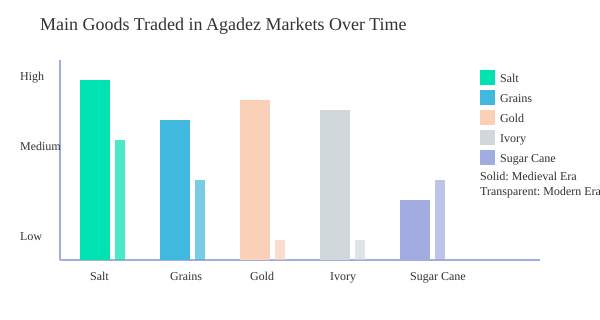
For centuries, Historic Agadez has thrived as a hub of the Trans-Saharan Trade. Less than a hundred years ago, its bustling markets were filled with traders dealing in slaves, gold, and ivory. These goods, once the backbone of the city’s wealth, were exchanged in lively bazaars where bargaining was—and still is—an art form. Today, while the trade in slaves and ivory has faded into history, the legacy of commerce remains deeply woven into the fabric of Agadez life.
The Vibrant Chaos of Agadez Market
Walking through the Agadez Market is an experience like no other. The air buzzes with energy as vendors call out their wares and customers haggle over prices. Here, you can find absolutely anything: sugar cane, onions, grains from the fertile lands of Niger, and, most importantly, salt. The market is a living reminder of Agadez’s role as a trading center, where goods from across the Sahara converge and are exchanged in a whirlwind of color and sound.
Salt Caravans: The Lifeblood of the Sahara
Among all the goods traded in Agadez, salt holds a special place. For more than a thousand years, Salt Caravans have sustained the local economy, bringing slabs of salt from distant mines across the desert. These caravans, often led by Tuareg traders and their camels, make Agadez their first port of call after crossing the wilderness. The city’s strategic location means that caravans from the north, south, east, and west all converge here, making Agadez truly Caravan Central.
Agadez at the Crossroads: Where Caravans Meet
The significance of Agadez’s location cannot be overstated. It is here, at the crossroads of ancient caravan routes, that cultures and commodities have mingled for centuries. The city’s markets and architecture reflect this rich heritage, shaped by the ebb and flow of traders, pilgrims, and adventurers from every direction. As I explore its streets, I am reminded that Agadez is not just a city of mud and markets—it is a living testament to the enduring spirit of the Sahara.
The Legendary Tuareg: Warriors and Nomads of the Sahara
Stepping into the world of the Tuareg is like traveling back in time. In the heart of the Sahara Desert, these remarkable people—often called the “Blue People” for their indigo-dyed robes—carry on traditions that have defined their culture for centuries. As I journeyed 120 miles (200 km) north from Agadez to Timia, I was drawn by the promise of meeting these legendary Tuareg nomads, known for their fierce independence, unique customs, and mastery of the desert.
Introducing the Tuareg: Desert Warriors and Guardians
The Tuareg tribes are instantly recognizable. Men wear flowing blue robes and, in a striking contrast to most Islamic societies, it is the men—not the women—who cover their faces. Their veils, called tagelmust, serve both as protection against the harsh desert winds and as a symbol of identity and pride. The women, meanwhile, leave their faces unveiled, a tradition that sets the Tuareg apart within the broader context of Niger culture and Islamic practice.
These are not people you’d want to cross lightly. “Only 18 months earlier, they were in full armed rebellion against the Niger government.” This recent history is a reminder of their warrior lineage and their ongoing struggle for autonomy in a rapidly changing world. Yet, despite their reputation as fierce fighters, the Tuareg are also known for their hospitality and deep knowledge of the Sahara Desert.
Masters of the Sahara: Controllers of Caravans and Trade
Historically, the Tuareg once ran an empire that controlled the central Sahara. For centuries, no caravan could pass through the desert without their permission. They were descendants of desert pirates and empire builders, shaping the flow of salt, gold, and other goods across North Africa. Their power was not just in their swords but in their ability to navigate and survive in one of the world’s harshest environments.
To a Tuareg, the caravan is more than just a means of transporting goods. As one Tuareg saying goes:
To a Tuareg, the caravan is a symbol of the journey of life.
This deep connection to the desert and its rhythms is at the heart of Tuareg culture and traditions.
Tuareg Traditions: Swords, Camels, and the Spirit of Freedom
Even at the dawn of a new millennium, the Tuareg maintain customs that seem untouched by time. It’s not unusual to see men wearing swords at their hips, a reminder of their warrior past. In Timia, I witnessed the excitement of camel races—a tradition that continues to bring the community together. Not long ago, these same riders would have lined up for a warrior’s charge, but today, it’s all about the thrill of the race.
The Tuareg’s blue robes are not just for show. The indigo dye stains their skin, earning them the nickname “Blue People.” These robes also help preserve moisture, a vital adaptation for survival in the Sahara’s dry heat. Their traditions, from sword-carrying to face veiling, are practical as well as symbolic, reflecting a culture shaped by the challenges of desert life.
Guides and Protectors: Essential Allies in the Sahara
For anyone hoping to cross the Tenere or any part of the Sahara, the Tuareg are indispensable guides and protectors. Their knowledge of the land, weather, and ancient caravan routes is unmatched. If you want to travel the desert and survive, you need their help. This role as guardians of the desert remains central to Tuareg identity, even as modern pressures reshape their way of life.
The Tuareg are more than just a tribe; they are a living symbol of freedom, resilience, and independence in the Sahara. Their traditions and way of life continue to inspire awe and respect among all who journey through their lands.
Salt Caravans: Lifeblood of the Sahara and Agadez Markets
When I first set foot in Agadez, I was immediately struck by the deep connection between this ancient city and the endless desert that surrounds it. At the heart of this connection are the legendary Salt Caravans, which have been the mainstay of the Sahara Desert’s economy for over a thousand years. As I explored the bustling Agadez Market, I realized that everything here is shaped by the needs of these desert caravans—from the goods on display to the very rhythm of daily life.
Ancient Salt Caravan Routes: Sustaining the Sahara for Millennia
For centuries, salt has been far more than just a seasoning in the Sahara—it has been a vital commodity, sometimes even traded ounce for ounce with gold. The trans-Saharan trade routes, carved by the relentless footsteps of camels and their Tuareg guides, have connected the salt mines of the north to the markets of the south. These routes cross some of the harshest landscapes on earth, including the unforgiving Ténéré Desert. The journey is long and perilous, but the reward is great: salt, essential for preserving food and maintaining health in the desert’s extreme climate.
It's actually been the mainstay of this whole area of Africa for probably more than a thousand years.
Caravan Logistics: Supplies for Travelers and Camels
As I watched the caravans arrive, I was fascinated by the careful planning that goes into each journey. Every member of the caravan, from the camel drivers to the traders, must be prepared for weeks in the wilderness. The Agadez Market is perfectly tailored to these needs. Here, you find:
Clothing and Footwear: Durable garments, sturdy sandals, and protective headwear for the harsh desert sun.
Food and Drink: Meat, dried fruit, sugar cane, onions, and grains—foods that can withstand the journey and provide energy.
Camel Supplies: Fodder, water containers, and even special grooming tools for the camels.
Personal Care: Barbers offering haircuts and traders selling soaps and ointments.
Everything about these markets is geared to caravans.
Every purchase is a careful calculation—how much water can be carried, how much food will last, and what supplies are essential for survival. The market is not just a place of commerce; it is a lifeline for those about to cross the desert’s vast emptiness.
Salt and Other Traded Goods: The Heart of Trans-Saharan Trade
While salt is the star of the show, it travels alongside other valuable goods. Caravans bring grains, spices, dates, and sometimes even textiles and precious metals. The exchange is not one-way; southern traders bring gold, ivory, and agricultural products to barter for the coveted desert salt. This flow of goods has shaped the region’s history and culture, turning Agadez into a true Caravan Central.
Agadez: The Crossroads of the Sahara
Agadez’s strategic position is no accident. Caravans converge here from the north, south, east, and west, making it the first port of call after crossing the wilderness. The city’s markets, architecture, and even its social life are all oriented around the needs of the caravans. The arrival of a caravan is a major event, bringing news, stories, and opportunities for trade and cultural exchange.
Caravans as a Symbol of the Tuareg Life Journey
For the Tuareg, the salt caravan is more than just an economic enterprise—it is a way of life. The journey across the desert is a test of endurance, wisdom, and community. It teaches patience, resilience, and respect for nature’s power. The interactions between caravan members and local traders are rich with tradition, negotiation, and mutual support. In many ways, the caravan is a living symbol of the Tuareg’s journey through life itself, where every crossing is both a challenge and a celebration.

The Air Mountains and Timia: Exploring Remote Desert Mysteries
My journey from Agadez leads me 120 miles—about 200 kilometers—north into the heart of the Sahara, where the Air Mountains rise from the desert floor. This remote region is not just a geographical landmark; it is a living museum of Tuareg traditions and a centerpiece for Niger cultural tours. The road to Timia, a key Tuareg settlement, is both challenging and rewarding, offering a window into the mysteries and resilience of desert life.
Traveling North: The Road to Timia Niger
The drive from Agadez to Timia is an adventure in itself. The route winds through rugged, rocky terrain, with the Air Mountains providing a dramatic backdrop. The landscape constantly shifts, from sandy plains to jagged outcrops, making travel slow and demanding. Reliable guides are essential here—not only for navigation but also for sharing local knowledge about the land and its people. The isolation of this region means that survival strategies are deeply tied to the environment, with every oasis and well marking a vital lifeline.
Timia: Heart of Tuareg Traditions and Camel Races
Arriving in Timia, I find a village that pulses with Tuareg culture. Timia is renowned for its camel races, a tradition that draws people from across the region. These races are more than sport; they are a celebration of Tuareg heritage and skill. The sight of camels thundering across the sand, guided by expert riders in flowing indigo robes, is unforgettable. The event is a social gathering, where music, dance, and storytelling fill the air, offering visitors a rare chance to witness authentic desert life.
Key Features of Timia’s Camel Races:
Frequency: Regularly held as part of local festivals and celebrations
Community Involvement: Brings together Tuareg families and neighboring tribes
Cultural Significance: Showcases horsemanship, endurance, and traditional attire
The Air Mountains: Ancient History and Archaeological Interest
The Air Mountains themselves are steeped in history. For centuries, they have served as a crossroads for traders, nomads, and explorers. Today, they attract archaeologists and travelers interested in Niger’s deep past. Scattered across the region are petroglyphs, ancient tombs, and remnants of long-lost settlements. The mountains’ valleys and plateaus once sheltered thriving communities, whose legacy is still visible in the ruins and rock art that dot the landscape.
Encounters with Desert Tribes
Traveling through the Air Mountains and Timia, I meet Tuareg families who continue to live much as their ancestors did. Hospitality is central to their culture. Sharing tea under a nomad tent, I hear stories of salt caravans and desert crossings. These encounters offer a unique perspective on survival and adaptation in one of the world’s harshest environments. The Tuareg’s deep connection to the land is evident in their music, crafts, and daily routines.
Ruins of Djado and Assodé: Windows into the Sahara’s Past
Beyond Timia, the ruins of Djado and Assodé stand as silent witnesses to the Sahara’s forgotten civilizations. Djado’s crumbling mud-brick fortresses and Assodé’s abandoned streets hint at once-thriving towns shaped by trade and migration. These archaeological sites are highlights of Niger cultural tours, offering insights into the rise and fall of desert societies. Exploring these ruins, I am reminded of the Sahara’s role as both a barrier and a bridge between cultures.
Modern Tours: Deepening Understanding of Niger’s Sahara
Today, guided tours through the Air Mountains and Timia Niger combine adventure with education. Experienced guides ensure safety while sharing stories of Tuareg traditions, ancient trade routes, and the region’s ecological challenges. Whether joining a desert caravan or exploring archaeological sites, visitors gain a deeper appreciation for the enduring spirit of the Sahara and its people.
A Personal Journey: Crossing the Tenere Desert with Tuareg Guides
Crossing the Tenere Desert in Niger is not just a journey across sand and stone—it is a test of endurance, trust, and adaptation. My own passage through this vast, remote expanse was guided by Tuareg nomads, whose deep knowledge of the Sahara shaped every step I took. Each day and night in the desert brought new challenges, but also a growing sense of freedom and connection to an ancient culture.
Preparation and Trust: The Foundation of Desert Survival
Before setting out, I learned that the Tenere Desert demands serious preparation. The extreme heat and dryness can be unforgiving, and survival depends on both physical readiness and mental resilience. The Tuareg guides, especially Hoya, became my lifeline. Their expertise was clear from the start—every item packed, every route chosen, every rest stop planned with care. I quickly realized that trust in their experience was not optional, but essential.
Water was our most precious resource. In the Tenere, daily water consumption can easily exceed a gallon (about 5 liters) per person. The heat was so intense that even conversation felt like an effort. As the Tuareg say,
“It’s too hot to talk.”
Every drop of water was accounted for, and I learned to ration my intake, sipping slowly and often, rather than gulping it down.
The Wisdom of Tuareg Robes: Clothing as Desert Technology
One of the most surprising lessons was the effectiveness of traditional Tuareg clothing. Their long, flowing robes and indigo-dyed turbans are not just cultural symbols—they are vital tools for desert survival. The loose fabric shields the skin from the sun, while the layers trap a thin layer of cooler air close to the body. This helps preserve moisture and prevents dehydration, a constant threat in the Tenere’s harsh climate. I quickly adopted these robes, feeling the difference as the days wore on.
Day After Day, Night After Night: The Rhythm of the Sahara
The journey unfolded slowly, with each day blending into the next. We traveled by camel and on foot, moving steadily across endless dunes and rocky plains. Nights were spent under a canopy of stars, the silence broken only by the wind and the soft murmurs of the Tuareg. There was a rhythm to desert life—early starts before the sun’s full heat, midday rests in the shade, and long evenings sharing simple meals around the fire.
With every passing day, I found myself falling further under the spell of the Tuareg sense of freedom and independence. Their way of life is shaped by the desert’s demands, but also by a deep respect for the land and for each other. I learned to read the landscape, to spot signs of water or shelter, and to move with patience and purpose.
Companionship and Trust: The Role of Tuareg Guides
Traveling with Hoya and his companions, I discovered the importance of trust and companionship in the desert. The Tuareg are known for their hospitality and resilience, and these qualities became my anchor. We shared stories and laughter when the heat allowed, and I came to rely on their calm confidence. The bond we formed was built on mutual respect and a shared goal: to cross one of the world’s remotest deserts together.
A Rite of Passage: Lasting Impressions of the Tenere
By the journey’s end, I understood why desert crossings are often described as rites of passage. With Hoya’s help, I had completed this challenge, joining a long tradition of travelers who have tested themselves against the Sahara. The Tenere Desert left its mark on me—not just as a place of hardship, but as a landscape of beauty, freedom, and enduring culture.
And with Hoya’s help, I have completed this rite of passage.
Reflections on Agadez: Connecting Past, Present, and Future
Standing in the heart of Agadez Niger, I can’t help but feel the weight of centuries pressing against the present. This city, with its intricate mud-brick architecture and bustling markets, is more than just a stop on a map—it’s a living crossroads where tradition and modernity meet in the vastness of the Sahara. As a photojournalist, I’ve seen many places, but few have struck me with such a powerful sense of cultural heritage as Agadez.
The Living Legacy of the Tuareg Culture
The Tuareg culture is woven into every corner of Agadez. These legendary desert warriors, with their indigo robes and veiled faces, are not just relics of history. Even today, the Tuareg remain the guardians of the Sahara’s identity. Their customs, music, and language echo through the city’s winding alleys and out into the endless dunes. Despite the pressures of modern life and the encroachment of new technologies, the Tuareg have managed to keep their traditions alive. Their resilience is a testament to the enduring spirit of the Sahara’s people.
Salt Caravans: The Pulse of Desert Trade
One of the most striking symbols of Agadez’s enduring importance is the salt caravan. For over a thousand years, these caravans have crossed the desert, bringing slabs of salt from the heart of the Sahara to the markets of Agadez. Even now, as the world changes rapidly, the sight of camels laden with salt is a reminder that some things remain constant. The salt trade is more than just an economic activity—it’s a lifeline that connects distant communities and sustains local economies. The caravan routes are arteries of commerce, culture, and survival, and they continue to shape the rhythms of life in Agadez.
Agadez: A UNESCO Historic Centre
Agadez’s recognition as a UNESCO World Heritage Site speaks to its unique place in world history. The city’s architecture, especially the towering mud minaret of its mosque, stands as a monument to human ingenuity and faith. Walking through the old city, I am constantly reminded that Agadez is not just preserving the past—it is living it, every day. The city’s markets, filled with goods from across the region, are a testament to its ongoing role as a hub of trade and cultural exchange.
Niger Tours: Bridging Worlds Through Cultural Tourism
Travelers who embark on Niger tours to Agadez are offered more than just a glimpse into history—they become part of a living story. Cultural tourism here is a two-way street: visitors gain a deeper understanding of the Sahara’s heritage, while local communities find new ways to share and sustain their traditions. This exchange can be transformative, fostering respect and appreciation for ways of life that are often overlooked or misunderstood. At the same time, tourism brings challenges, as it can sometimes threaten the very traditions it seeks to celebrate. The balance between preservation and adaptation is delicate, but it is one that Agadez continues to navigate with remarkable grace.
Resilience and Adaptability in the Sahara
What strikes me most about Agadez and its people is their extraordinary resilience. Whether facing the harsh realities of desert life or the uncertainties of a changing world, the people of Agadez adapt without losing sight of who they are. The Tuareg, in particular, embody a sense of freedom and independence that is both inspiring and humbling. Their ability to maintain their identity, even as the world around them shifts, is a lesson in strength and adaptability.
Preserving Traditions for the Future
As I reflect on my journey, I am reminded that Agadez is more than a city—it is a bridge between past and future. Its cultural heritage is not just something to be admired from afar, but a living force that continues to shape lives and inspire journeys. The challenge now is to ensure that these traditions endure, so that future generations can experience the magic of Agadez and the enduring spirit of the Sahara.
Wild Card Elements: Hypothetical Sahara Scenarios and Quotes
As I wandered through the ancient city of Agadez, the gateway to the Sahara Desert, I found myself imagining what it would be like to cross the vast Ténéré without a single piece of modern technology. No GPS, no satellite phone—just the wisdom and traditions of the Tuareg people to guide me. In this part of Niger, where the desert meets the mountains, the Tuareg have survived for centuries by reading the land, the stars, and the subtle signs of nature. Their knowledge is a living testament to the resilience and adaptability of human culture in one of the world’s harshest environments. Relying solely on their guidance, I realized, would be both a test of trust and a rite of passage, echoing the journeys of countless travelers before me.
The Sahara Desert is more than endless sand; it is a living canvas for human endurance, culture, and renewal. The traditional salt caravans that wind their way through the dunes are not just about commerce. To the Tuareg, the caravan is a symbol of the journey of life itself. As I watched the camels and their drivers prepare in the bustling Agadez markets, I understood that every detail—from the food packed for the camels to the robes worn by the men—was steeped in meaning. The caravan is a moving community, a ritual that binds people together and connects them to their ancestors and the land.
“To a Tuareg, the caravan is a symbol of the journey of life.”
This quote, spoken to me by a Tuareg elder, captures the mysterious allure of the desert and its people. The Sahara’s silence, its vastness, and its challenges all contribute to a sense of freedom and independence that is hard to find elsewhere. As I traveled further north towards Timia, famous for its camel races, I was struck by how these traditions endure even as the world changes around them. The camel races themselves are more than a spectacle; they are a celebration of community, skill, and heritage. They remind everyone—locals and travelers alike—of the importance of coming together, of testing oneself, and of honoring the past.
But the future of these traditions is uncertain. The Sahara is changing. Climate change threatens the delicate balance that has sustained nomadic life for generations. Water sources are becoming scarcer, and the routes of the salt caravans may shift or disappear altogether. As I stood in the market, surrounded by the chaos and color of Agadez, I couldn’t help but wonder: what will become of the salt caravans and the Tuareg way of life in the coming decades? Will the next generation still find meaning in the journey across the desert, or will new technologies and global influences reshape their identity?
Already, I see signs of change. Young Tuareg men check their mobile phones between races, and digital music mixes with the traditional sounds of the desert. There is a fusion happening here—a blending of old and new, of ancient rituals and emerging digital influences. Yet, even as modernization creeps in, the core values of the Tuareg culture remain strong. The caravan, the race, the robe, and the sword—all these are symbols of a cultural heritage that refuses to fade.
In the end, my journey through Agadez and across the Sahara was not just about witnessing a way of life; it was about understanding the deeper meaning behind it. The Tuareg have shown me that survival in the desert is about more than endurance—it is about community, tradition, and the willingness to adapt. As I reflect on my travels, I am reminded that the Sahara’s greatest treasure is not its salt or its gold, but its people and their stories. Their journey is, in many ways, our journey—a reminder that, no matter how far we travel, we are all part of a caravan moving through the sands of time.
